Texas garden field guide
Growing Cucumbers on a Trellis in Texas
A trellis can make cucumbers easier to inspect and harvest, but it needs a stable base and enough room for the variety. Plan the support before sowing so you do not disturb the roots later.
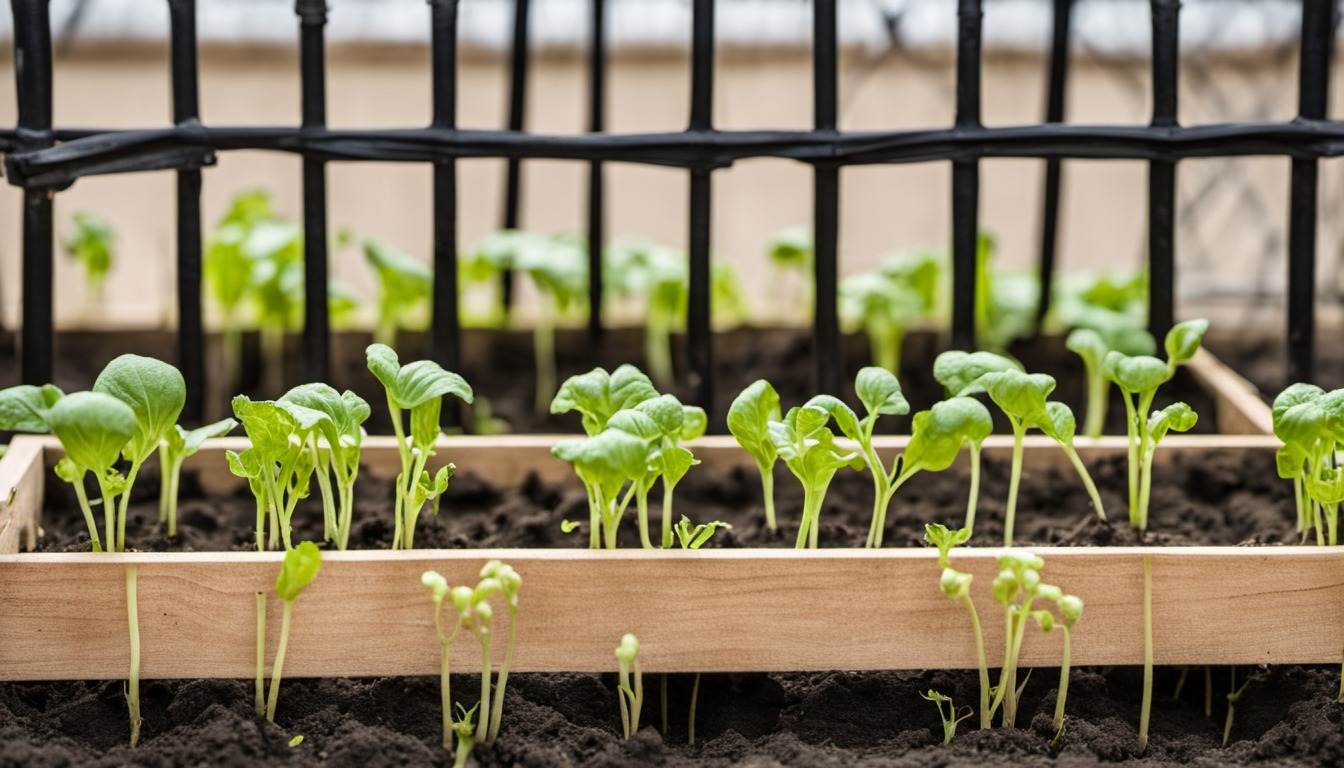
Choose the support before planting
Select a vining variety for a trellis and secure posts for the weight of mature growth and local wind. Place the frame where its shadow will not block shorter sun-loving crops. Leave access to both sides if possible, because cucumbers can hide behind leaves. Guide a young vine gently toward the support and check ties as stems enlarge. A compact variety may not need the same tall structure; compare its label with the available space.
Schedule a frost-free crop
Use your county extension window and the seed packet for sowing depth, spacing and maturity. Cucumbers are warm-season plants; do not equate a single statewide date with a safe local planting day. For fall, allow time for establishment in heat and fruit development before cold. Water the soil when needed and check the wetting pattern as vines grow; a trellis organizes the canopy but does not automatically keep the root zone moist.
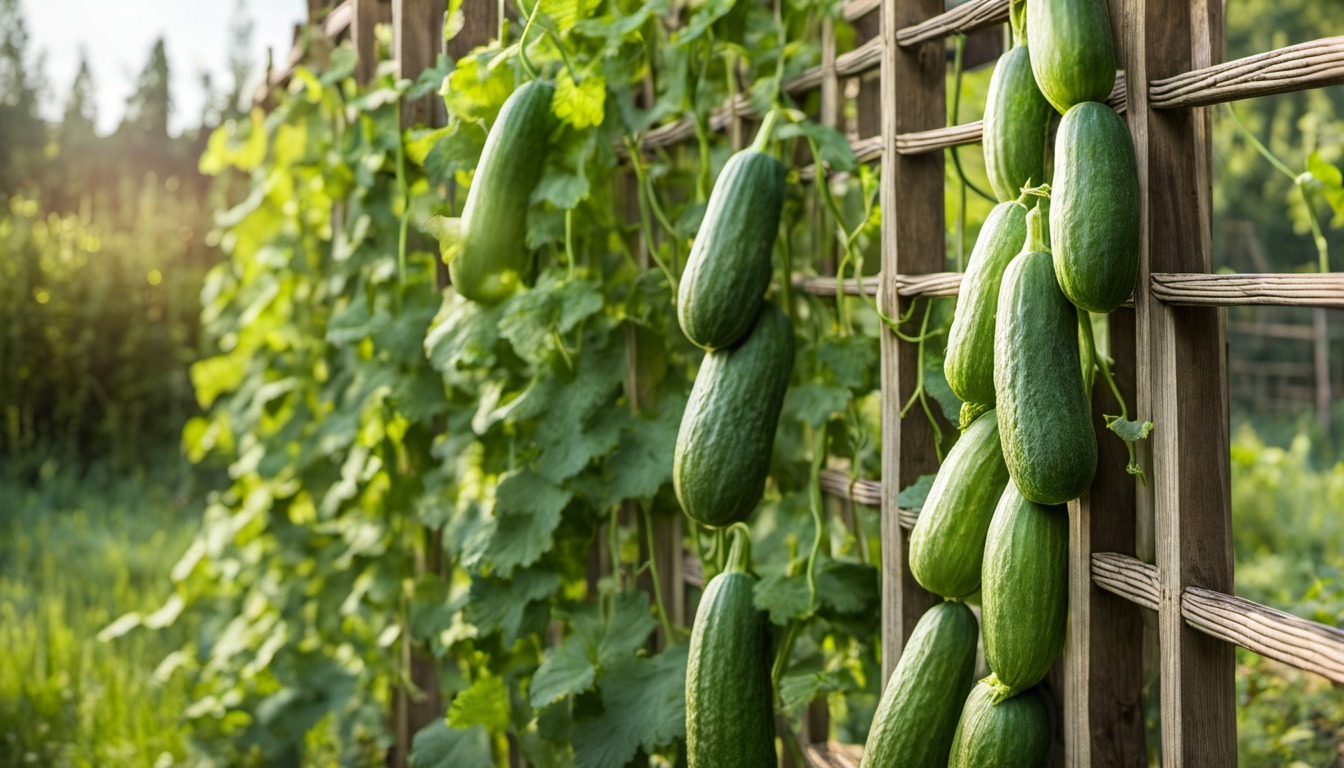
Interpret flowers and harvest
Not every flower becomes fruit. Look at flower activity, weather and plant condition before assuming a fertilizer problem. Keep flowering plants accessible to pollinators if using a barrier. The Texas fall guide recommends harvesting cucumbers while firm and green before they become too large; check the variety for the preferred size and use. Inspect both sides of the support, remove damaged fruit and use clean tools rather than pulling vines from their ties.
Plan access to both sides
A trellis saves some horizontal space but can hide fruit and leaf damage. Allow a route to inspect the back and secure the frame before vines add weight. Use ties that do not cut into growing stems. If the bed borders a path, choose a support that will not fall across it in wind; check connections as the canopy grows.
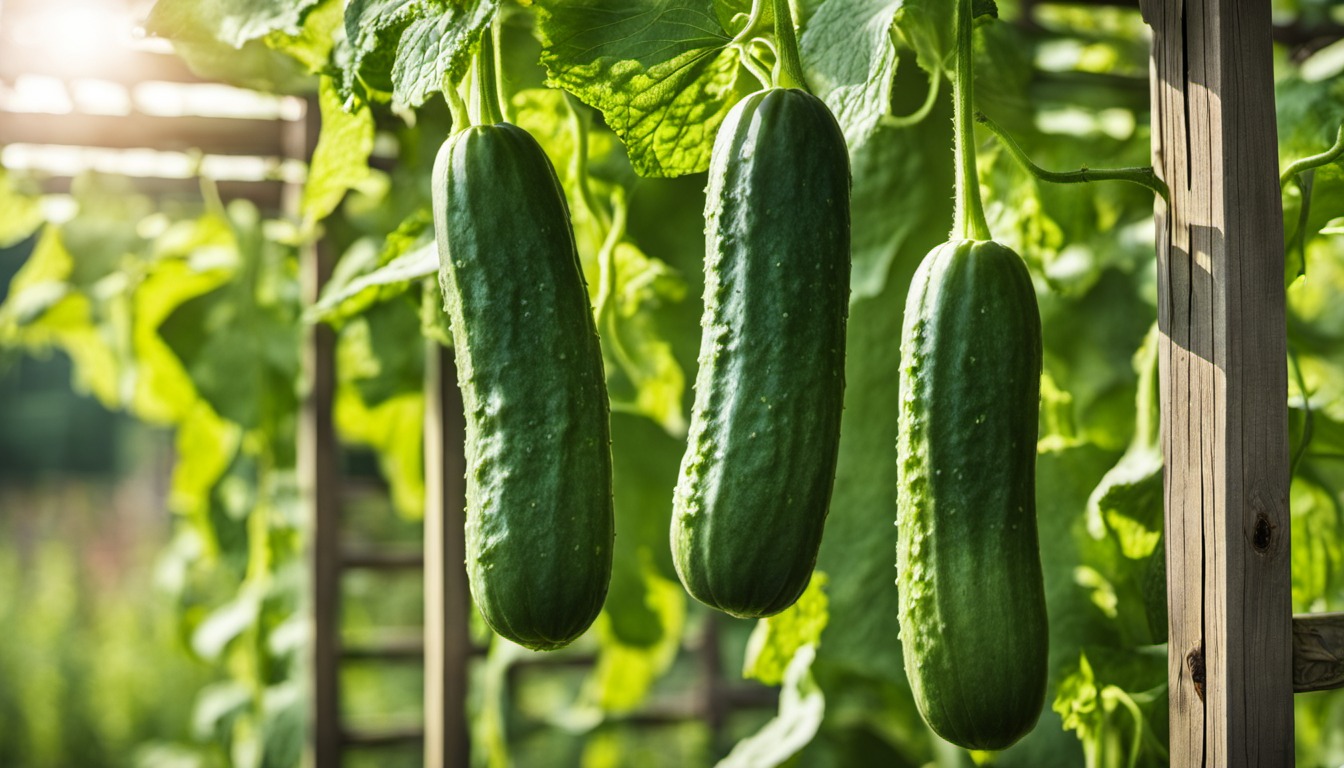
Pick for the variety’s use
Texas A&M lists slicing and pickling varieties in its fall guide and recommends harvesting cucumbers while firm and green before they become too large. Check the packet for the preferred size, then look behind leaves regularly. If small fruit stops growing, note weather and flower activity as well as moisture; a single fruit does not establish the cause.
Estimate the planting window backward
For a fall crop, compare the packet’s maturity estimate with your local regional window and the expected first frost. The Texas fall guide lists cucumber as frost-susceptible, so the fruiting period needs to fit before damaging cold. The number on the packet is an estimate, not a promise; heat during establishment or later cool weather may change growth. Choose the variety and support together before sowing.