Oklahoma garden field guide
Support Pollinators Near an Oklahoma Vegetable Garden
Flowers near vegetables can provide resources for pollinators while adding color to the garden. A thoughtful planting offers blooms over time and leaves room for the crops and people using the site.
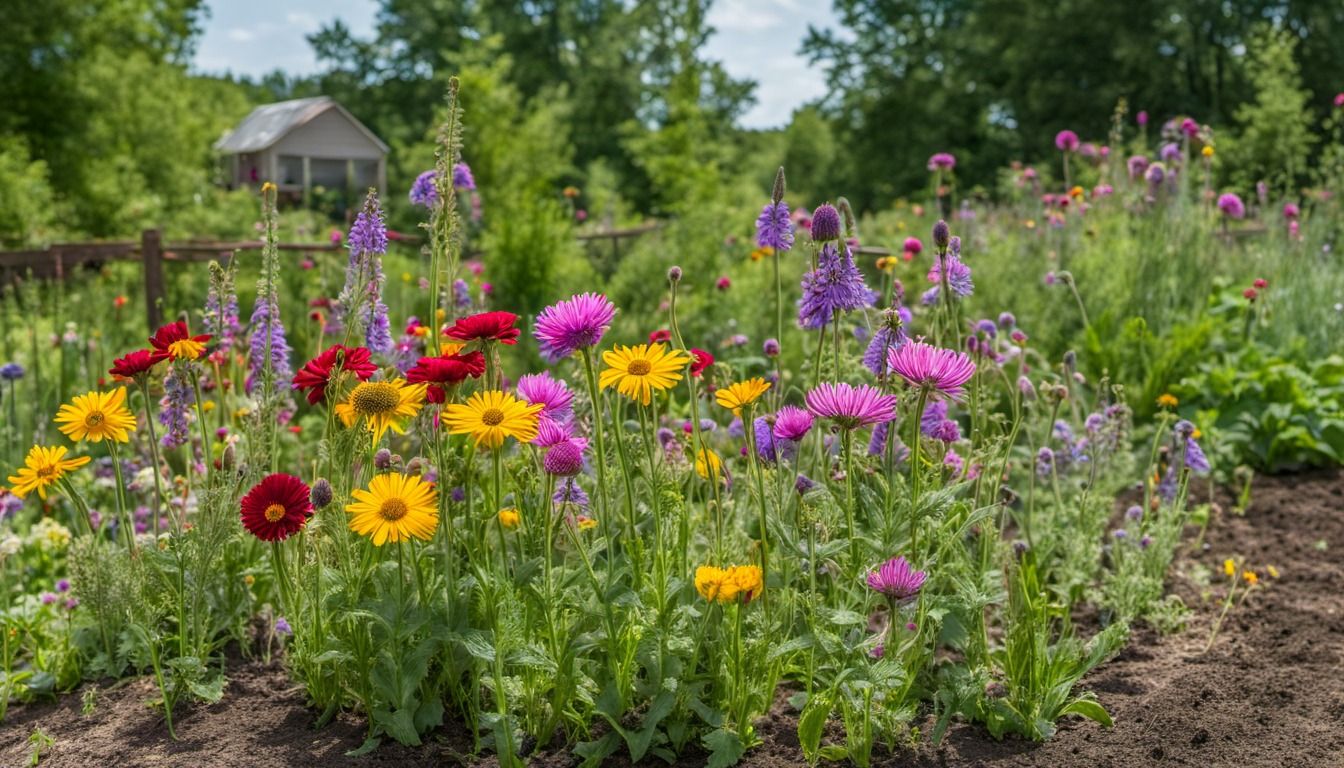
Connect flowers and crops
Cucumbers and squash often rely on insect visits for fruit set, although flowering and pollination needs vary by variety. Place a flower border where it gets suitable light without shading vegetables or blocking paths. Observe which flowers are visited rather than assuming every bloom attracts the same insects.
Choose for the site
Select plants adapted to your soil, light and available water. Include a succession of flowering periods rather than one short burst, and consider native species appropriate to your location. Ask county Extension or a local native-plant resource for region-specific choices and management advice.
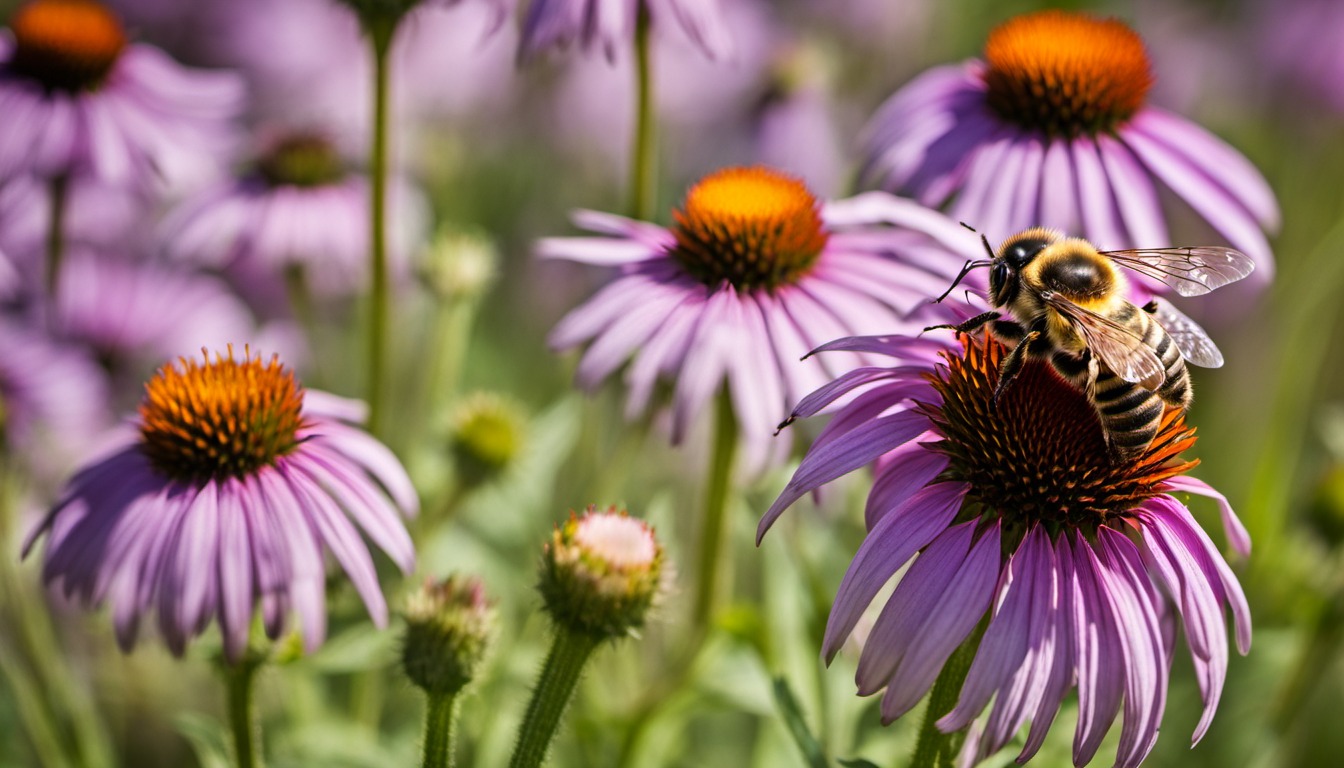
Provide habitat
Some native bees nest in the ground and others use stems or cavities. Leave suitable undisturbed areas when practical, and delay cutting some hollow stems until the appropriate season. Provide a shallow water source with safe landing spots, keeping it clean and refreshed.
Manage pests carefully
Identify the pest and consider physical or cultural controls before applying a pesticide. If treatment is necessary, follow the current label and avoid exposure of visiting pollinators. A flower border does not eliminate pest problems, and broad treatment can harm beneficial insects as well as pests.
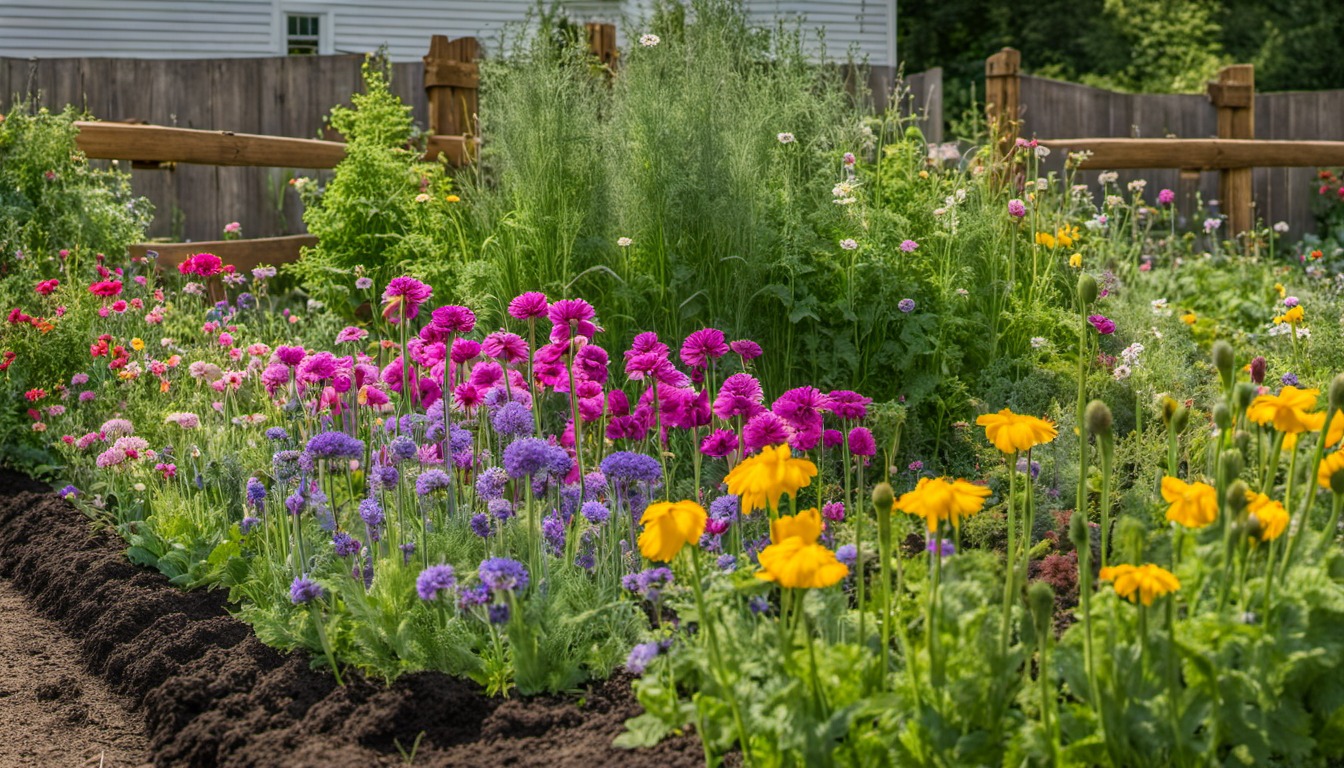
Observe through the year
Note bloom times, visitors, water needs and which plants thrive without crowding vegetables. Replace plants that do poorly rather than repeatedly forcing a poor site match. A small, well-maintained border with several bloom periods can be a useful starting point.
Example: design a narrow border
A narrow sunny strip beside a vegetable bed can hold several plants with different bloom periods. Leave a path between the border and the vegetables so you can harvest without damaging flowers, and place taller plants where they will not shade the crop. Choose locally adapted species and verify their mature spread and water needs before planting.
Observe the border on different days and at different times; pollinator activity changes with weather and bloom. Leave suitable undisturbed nesting areas where practical and avoid applying pesticides to open flowers. If a crop has poor fruit set, also check water, temperature and its variety’s pollination needs rather than assuming the border alone guarantees a harvest.
OSU identifies native asters, including aromatic aster, as useful fall resources for pollinators in Oklahoma. Check the plant’s size and preferred conditions before placing it in a narrow border. A locally appropriate plant list and a sequence of blooms are more useful than choosing plants solely for their color on one shopping day.